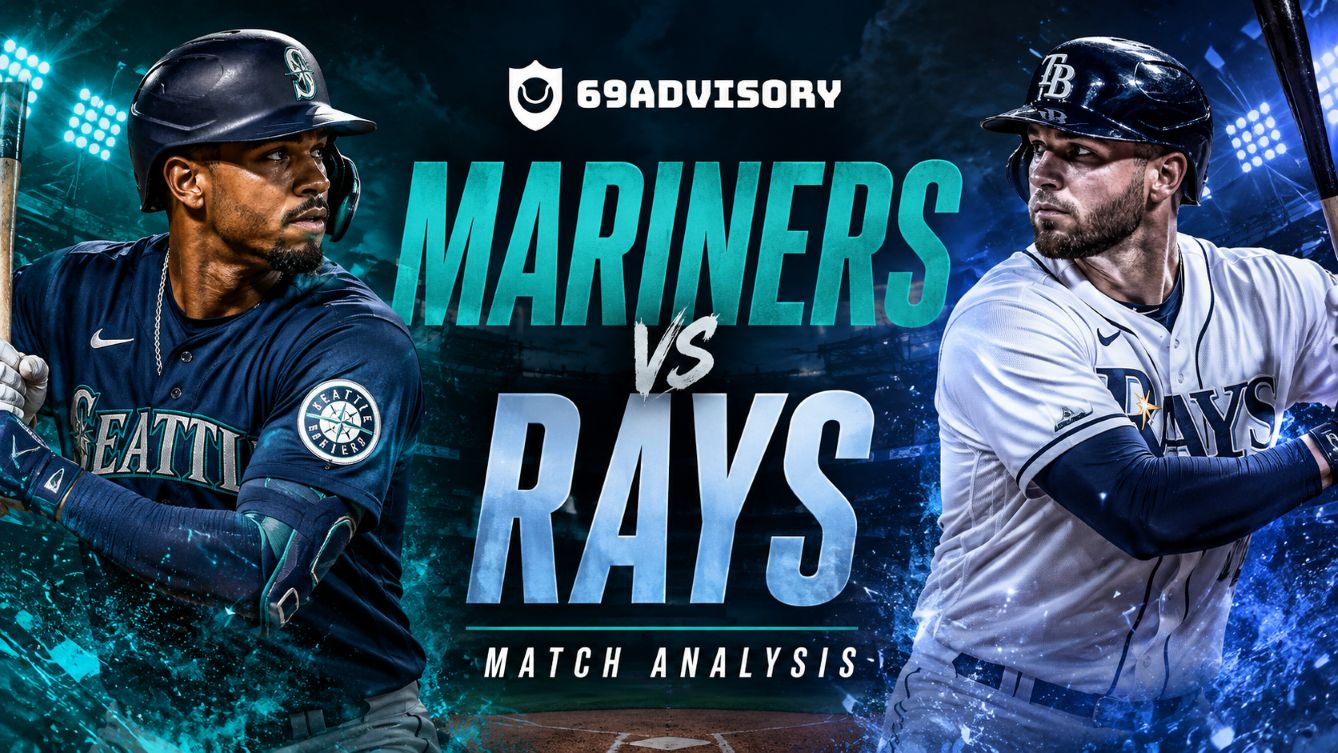
Note: this analysis is published for the archive after the game. It shows how our model read the matchup — it is not a live recommendation.
Tampa owned a strong platoon edge in this matchup. The Rays carried a .754 OPS against right-handed pitching, while Seattle had managed only a .652 OPS against left-handers. That gap was the key statistic behind the selection.
The current form supported the profile too: Tampa had won 14 of their last 18, a 77.8% stretch. Ian Seymour’s 4.27 ERA came with a stronger 3.88 FIP, suggesting his underlying work had been better than the surface results. Emerson Hancock had posted a 3.33 ERA and 3.76 FIP — a capable starter, but not a gap large enough to justify fading Tampa with run-line protection.
Hancock led on the surface, but Seymour’s FIP closed most of the gap — not enough separation to fade the platoon edge.
The model projected a close game, which is why the +1.5 run line — not the moneyline — was the market. Tampa did not need to win; a one-run loss still cashed, and that mattered against Seattle’s home field and stronger bullpen.
The main risk was Tampa’s bullpen workload after using seven relievers in the previous game, along with the possibility of an early Hancock-led shutdown. Starting lineups were unconfirmed at release, so exposure stayed disciplined at 1 unit.
This is how we break down a game. Register to receive our free tips, and start 7 days of the full daily picks at no charge — one high-conviction pick a day, with a clear stake and a minimum-odds line.
18+ · Please gamble responsibly.
69 Advisory provides informational sports analysis only. Predictions are not a guarantee of results and past performance does not indicate future outcomes. Only stake what you can afford to lose.
October Baseball: Why the Postseason Is a Different Betting Market
Smaller rosters, no automatic runner, aces on short rest and relievers throwing over half the innings. The playoffs are not the regular season with higher stakes.
Read articleChasing Losses: The Psychology of Tilt and How to Interrupt It
Chasing costs more money than bad selections ever will. Here is what is actually happening cognitively, and the interventions that work.
Read articleSetting Betting Limits That Actually Hold: A Practical Guide
Good intentions fail under pressure. Deposit limits, time-outs and self-exclusion work because they do not rely on willpower at the moment it is weakest.
Read article

 Back to blog